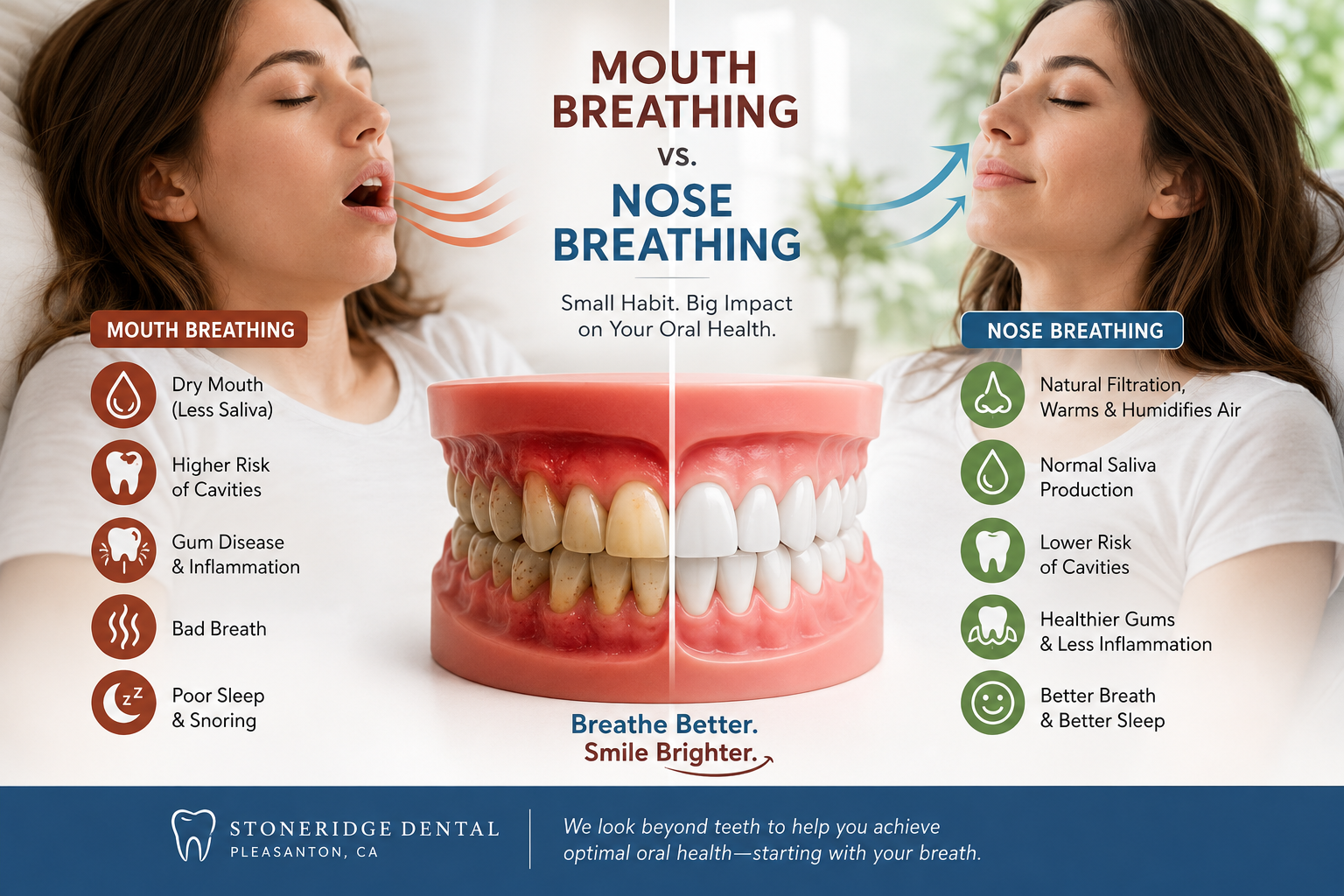
What's the Difference Between Mouth and Nose Breathing?
It sounds simple, but the way you breathe has a profound effect on your oral health. Nose breathing is the natural, intended way your body processes air—it filters, warms, and humidifies the air before it reaches your lungs. Mouth breathing, on the other hand, bypasses these important protective mechanisms and sends dry, unfiltered air directly into your mouth and throat.
While occasional mouth breathing (like when you're exercising or have a stuffy nose) is completely normal, chronic mouth breathing—especially at night or during sleep—can create serious problems for your teeth and gums.
How Mouth Breathing Damages Your Teeth
Dry Mouth is the Gateway Problem
Saliva is your mouth's natural defense system. It neutralizes acids, washes away food debris, and prevents bacterial growth. When you breathe through your mouth, saliva production decreases, leaving your mouth dry and vulnerable. This condition, called xerostomia, creates the perfect environment for tooth decay and gum disease to flourish.
Increased Risk of Cavities
Without adequate saliva, harmful bacteria multiply unchecked. These bacteria produce acids that attack tooth enamel, leading to cavities. Mouth breathers tend to have significantly higher cavity rates than nose breathers, even when they maintain similar brushing habits.
Gum Disease Development
Dry mouth and bacterial overgrowth combine to irritate and inflame your gums. Over time, this can progress to gingivitis and periodontal disease, which can lead to tooth loss if left untreated.
Bad Breath
That dry mouth environment also creates ideal conditions for odor-causing bacteria, making chronic bad breath a common complaint among mouth breathers.
Signs You Might Be a Mouth Breather
- Waking up with a dry mouth or sticky feeling
- Chronic bad breath despite good oral hygiene
- Frequent sore throat or hoarseness in the morning
- Lips that are always dry or chapped
- Sleep apnea or snoring
- Visible mouth breathing during the day or while sleeping
- Higher than average cavity count
How to Switch to Nose Breathing
Practice During the Day
Start by being mindful of your breathing habits. Set reminders to check in with yourself throughout the day. If you catch yourself mouth breathing, gently close your lips and take a few deep breaths through your nose. Make this a conscious habit until it becomes automatic.
Address Nasal Congestion
If allergies or a deviated septum are forcing you to mouth breathe, talk to your doctor. Treating underlying nasal issues can make nose breathing much easier and more comfortable.
Try the Lip Seal Technique
During the day, practice keeping your lips gently closed while breathing through your nose. This trains your facial muscles and helps reprogram your breathing pattern.
Use Nasal Strips if Needed
If you have mild nasal congestion, over-the-counter nasal strips can help open your nasal passages and make nose breathing feel easier and more natural.
Be Patient at Night
Night-time mouth breathing is often the hardest to control since you're asleep. If you suspect you mouth breathe at night, mention it to Dr. Nelson. Sometimes a humidifier in your bedroom or a sleep study can help identify and address the root cause.
Why Dr. Nelson Talks About This
At Stoneridge Dental, we believe that good oral health starts with understanding the habits that affect your teeth and gums. Breathing patterns might seem unrelated to dentistry, but they're actually one of the most overlooked factors in preventing decay and gum disease. When Dr. Nelson notices signs of mouth breathing—like dry mouth or unusual wear patterns on your teeth—he'll bring it up because he wants to help you protect your smile long-term.
The Bottom Line
Your nose is there for a reason! Making the switch from mouth breathing to nose breathing is one of the simplest yet most powerful changes you can make for your oral health. Combined with regular brushing, flossing, and professional cleanings, nose breathing can dramatically reduce your risk of cavities, gum disease, and other dental problems.
If you're concerned about mouth breathing or have noticed signs of dry mouth and tooth decay, schedule a visit with Dr. Nelson at Stoneridge Dental in Pleasanton, CA. We're here to help you breathe easier and smile brighter!