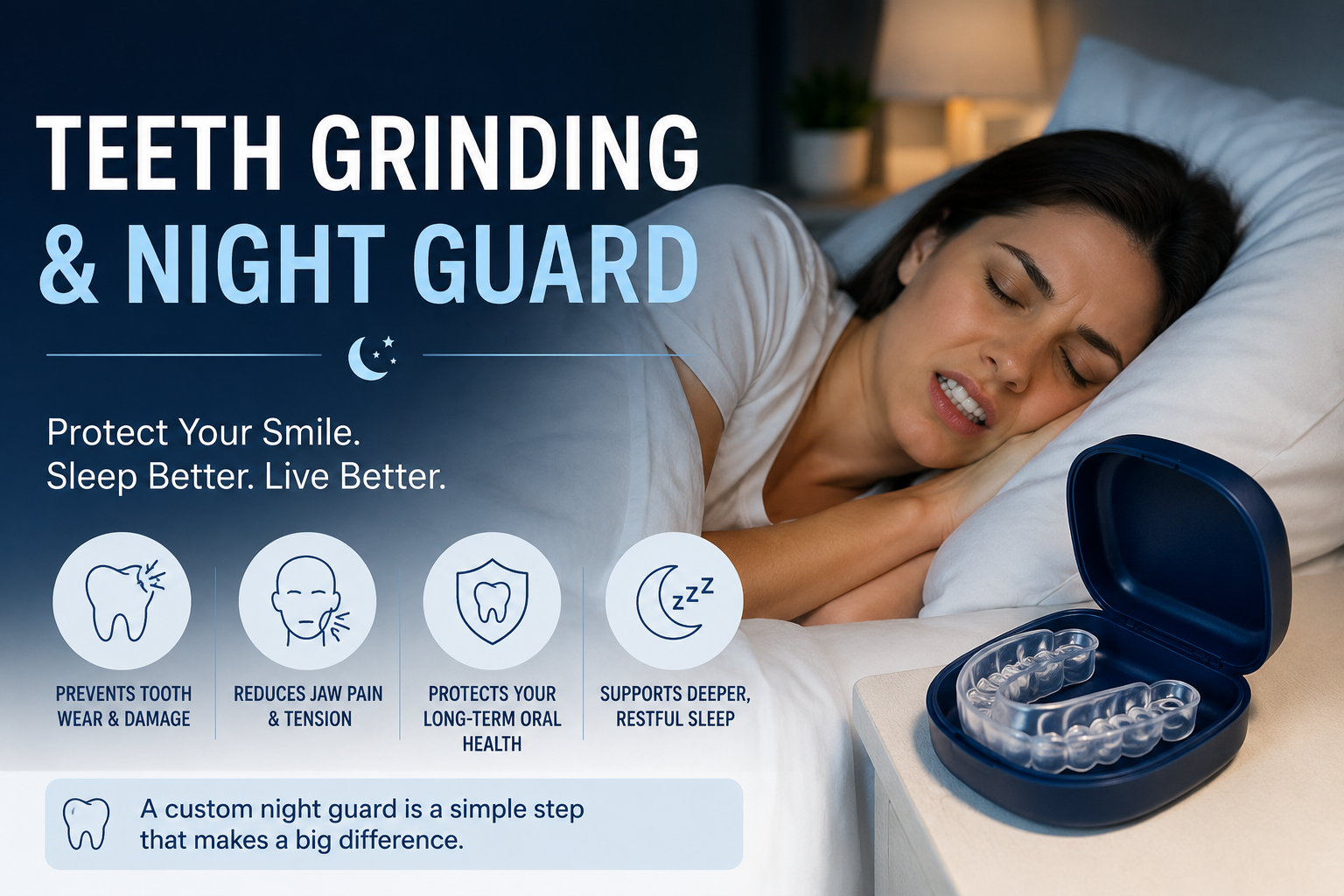
What Is Bruxism?
Bruxism is the involuntary clenching and grinding of your teeth, often occurring during sleep. Unlike conscious habits you can control during the day, nighttime grinding happens without your awareness, which makes it particularly challenging to manage on your own. Many people don't even realize they're doing it until a dentist or sleep partner points out the telltale signs.
Common Signs You Might Be Grinding Your Teeth
If you experience any of these symptoms, bruxism could be the culprit:
- Waking up with jaw pain, soreness, or stiffness
- Chronic headaches or migraines, especially in the morning
- Worn-down, flattened, or chipped teeth
- Sensitive teeth that become increasingly painful
- A partner mentioning loud grinding or clicking sounds at night
- Tight or fatigued facial muscles upon waking
- Damage to dental work like crowns or fillings
What Causes Teeth Grinding?
Bruxism can stem from several different factors, and sometimes multiple causes work together:
- Stress and Anxiety: One of the most common triggers. Your body may clench and grind as a physical response to emotional tension.
- Sleep Disorders: Conditions like sleep apnea are frequently linked to bruxism.
- Misaligned Bite: When your teeth don't align properly, your jaw may work harder, leading to grinding.
- Lifestyle Habits: Excessive caffeine, alcohol consumption, and smoking can increase grinding episodes.
- Medications: Some antidepressants and stimulants are associated with teeth grinding.
- Family History: Bruxism can run in families, suggesting a genetic component.
Why You Shouldn't Ignore It
While it might seem like a minor annoyance, untreated bruxism can cause serious damage over time. The constant grinding wears down tooth enamel, leading to sensitivity, decay, and eventual tooth loss. It can also damage existing dental work and contribute to temporomandibular joint (TMJ) problems, causing chronic pain and dysfunction. The sooner you address it, the better you can protect your long-term oral health.
How Dr. Nelson Can Help
During your visit to Stoneridge Dental, Dr. Nelson will examine your teeth for signs of grinding wear and discuss your symptoms. One of the most effective treatments is a custom-fitted night guard—a protective device you wear while sleeping. Unlike over-the-counter options, a custom night guard from our practice is tailored precisely to your mouth for maximum comfort and protection.
Dr. Nelson may also discuss stress management techniques, recommend lifestyle changes, or suggest evaluation by a sleep specialist if sleep apnea is suspected. Addressing the underlying cause is just as important as protecting your teeth.
What You Can Do at Home
While a night guard is often the best solution, these habits may help reduce grinding:
- Practice stress-reduction techniques like meditation, yoga, or deep breathing
- Avoid caffeine and alcohol, especially in the evening
- Apply a warm compress to your jaw before bed to relax muscles
- Maintain good sleep hygiene with a consistent bedtime routine
- Be mindful of clenching during the day and consciously relax your jaw
Don't Let Bruxism Damage Your Smile
If you suspect you're grinding your teeth, don't wait for more damage to occur. Contact Stoneridge Dental in Pleasanton, CA today to schedule an appointment with Dr. Nelson. We'll identify the problem, discuss your options, and create a personalized plan to protect your teeth and improve your quality of life. Your smile—and your jaw—will thank you.