Maybe you have a chipped tooth, a gap, or teeth you'd like to improve. You may have heard that both dental bonding and porcelain veneers can improve your smile. But how do you know which option makes sense for you?
At Stoneridge Dental in Pleasanton, we believe cosmetic dentistry should look natural and preserve healthy teeth whenever possible. Bonding and veneers can both be excellent choices, but they differ in materials, cost, maintenance, and how much tooth structure is changed. Here's a guide to your options.
What Is Dental Bonding?
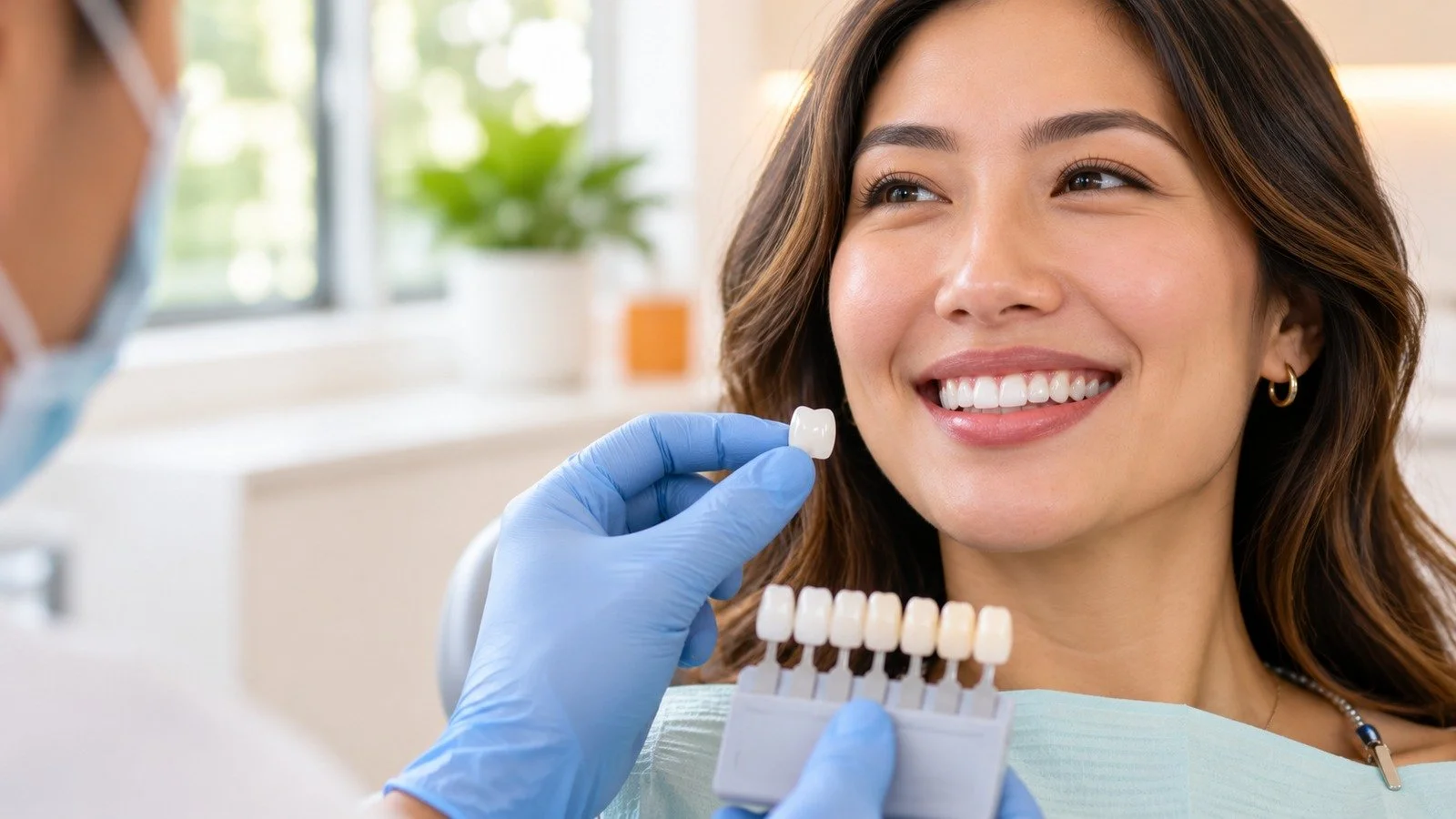
Dental bonding uses tooth-colored composite resin, a material similar to what's used for white fillings, to change the shape or appearance of a tooth. Your dentist selects a shade, carefully places and sculpts the resin, hardens it with a curing light, and polishes it to blend with your natural enamel.
Bonding is often a good fit for smaller improvements, such as:
- Repairing a minor chip on a front tooth
- Closing a small space between teeth
- Smoothing an uneven or slightly worn edge
- Changing the appearance of a tooth that's a little short or narrow
- Covering a small area of discoloration that whitening won't address
In many cases, bonding can be completed in one appointment with little or no removal of healthy enamel. That's a major advantage for patients who want a conservative first step. However, bonding isn't suitable for every bite, gap, or damaged tooth.
What Are Porcelain Veneers?
Porcelain veneers are thin, custom-made ceramic coverings bonded to the front surfaces of teeth. They can change several aspects of a smile at once, including color, shape, length, and the appearance of certain spaces or minor alignment differences.
Unlike bonding, which is sculpted directly on the tooth, porcelain veneers are typically designed using impressions or digital scans and fabricated before they're bonded in place. Traditional veneers usually require removing a small amount of enamel to make room for the ceramic. Because enamel does not grow back, this type of treatment is generally irreversible.
Veneers may be worth considering when you want a more extensive cosmetic change across several visible teeth, particularly when long-term color stability is important. They are not a substitute for treating decay or gum disease, and severely misaligned teeth may be better managed with orthodontic treatment first.
Bonding vs. Veneers: The Differences That Matter
Tooth preservation: Bonding usually involves less enamel removal. Veneers may require permanent preparation, so your dentist should explain exactly how much tooth structure would be changed.
Time: Bonding is commonly completed in one visit. Porcelain veneers generally involve planning, tooth preparation, fabrication, and a separate bonding visit, although workflows vary.
Appearance: Both can look natural when thoughtfully designed. Porcelain offers excellent translucency and generally maintains its surface gloss and color better over time. Composite resin can also look beautiful, especially for small, carefully placed repairs.
Staining and wear: Composite resin is more likely to pick up surface stains and may chip or wear sooner. Porcelain resists staining better, but it can still fracture or come loose. Neither option is indestructible.
Cost: Bonding usually has a lower initial cost per tooth. Veneers generally cost more because of the custom ceramic fabrication and additional steps. Insurance often does not cover treatment performed solely for cosmetic reasons; benefits depend on your plan and clinical situation.
How Long Do Bonding and Veneers Last?
There is no guaranteed lifespan for either treatment. As a general guide, bonding may need polishing, repair, or replacement within roughly three to ten years. Porcelain veneers often last around ten to fifteen years with good care, although some last longer and others need attention sooner.
The biggest factors include how much material is placed, where it sits in your bite, whether you grind or clench, and how you care for your teeth. A tiny bonded corner on a front tooth is a different situation from extensive bonding across several heavily loaded teeth.
One useful distinction: a small chip in composite bonding can often be repaired directly. A damaged porcelain veneer may require a more involved repair or replacement. Your dentist can help you weigh the initial investment against possible future maintenance.
Which Treatment Makes Sense for Common Smile Concerns?
A small chipped tooth: Bonding is often the first option to explore because it can restore the missing edge conservatively. A larger fracture or weakened tooth may need a different restoration.
A small gap between front teeth: Bonding may close the space without moving teeth. But if the gap is large or related to your bite, Invisalign or another orthodontic approach may create a healthier, more balanced result.
Several teeth with uneven shapes or persistent discoloration: Veneers may provide a more consistent transformation. Bonding may still work for selective improvements, depending on the amount of change needed.
Teeth that look too dark: Before covering healthy teeth, ask whether professional whitening could achieve your goal. Whitening changes natural tooth color but does not lighten existing bonding or porcelain, so treatment sequence and shade matching matter.
Teeth affected by grinding: Both bonding and veneers can be vulnerable to heavy forces. It's important to evaluate the bite and discuss whether a night guard or other care is needed before cosmetic work.
Can You Combine Bonding and Veneers?
Absolutely. A smile plan doesn't have to use the same treatment on every tooth. For example, porcelain veneers might be appropriate for two prominent front teeth, while a small bonded repair improves a neighboring tooth. In other cases, no cosmetic restoration is needed at all.
The best approach starts with your goals, your bite, the condition of your enamel and gums, and how much maintenance you're comfortable with. Photos, a clinical examination, and sometimes digital scans can help you visualize the possibilities before committing.
How to Care for Your New Smile
Whether you choose bonding or veneers, daily habits make a difference:
- Brush twice daily with fluoride toothpaste and clean between your teeth every day.
- Avoid using your front teeth to open packages, bite nails, or chew ice.
- Tell your dentist if you clench or grind your teeth.
- Keep regular dental checkups so small issues can be addressed early.
- Ask before using abrasive whitening products that could affect the finish of restorations.
If a restoration feels rough, chips, or changes how your teeth meet, contact your dentist rather than trying to smooth it yourself.
Thinking About Bonding or Veneers in Pleasanton?
There isn't one best cosmetic treatment for everyone. Bonding is often ideal for a smaller, conservative improvement, while porcelain veneers may be better suited to broader, longer-lasting changes in shape and color. A personalized examination is the best way to understand the tradeoffs for your teeth.
At Stoneridge Dental, Dr. Nelson Wong helps patients in Pleasanton, Dublin, San Ramon, and the surrounding Tri-Valley explore natural-looking cosmetic options without pressure. If you're ready to talk about your smile goals, schedule a consultation or call (925) 830-8989. We'd be happy to help you understand your choices.
This article provides general dental education and is not a substitute for a personalized examination or treatment recommendation.